

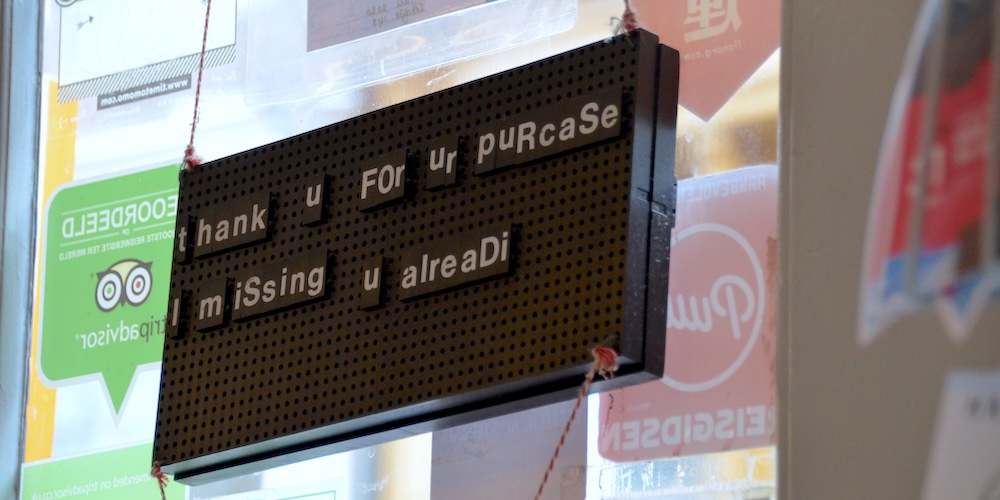
Typos, grammar bloopers and poor word choice weaken the credibility of your message. Editing or proofreading aligns your words with the quality of your offer.
By Peter F. Ohman, Senior Copyeditor & Copywriter at steelecht
Your new product is exceptionally engineered: sleek, functional and well-designed. The images and the packaging reflect both its beauty and its brawn. Yet all this effort can be undermined by a single typo or grammatical error. It can cost you customers, your reputation and even real cash.
How can avoidable mistakes end up in your texts?
It’s probably because someone decided to pinch pennies and did not go to an experienced proofreader or editor. That’s a bit like a manufacturer of high-performance automobiles investing heavily in the engine, brakes, luxury interior…and then skimping on the paint job.
It’s amazing what an outside perspective can add to a text.
To put it simply: textual editing and proofreading should be recognized as essential components of your marketing process.
So what’s the difference between editing and proofreading?
In everyday usage, people generally use the word “edit” for any kind of text revision. However, editing and proofreading are not the same thing.
Editors think of the big picture, focusing on content, structure, clarity and style. An editor might ask questions like:
- Does the content match the briefing?
- Does the style and tone of voice match the brand and the audience?
- What is the desired response of the reader and how can we increase the likelihood of that response?
Editors may not actually make many changes themselves, but rather make suggestions and return the text to the original writer for adaptation.
Proofreaders, on the other hand, need to have a great attention to detail. They are the last line of defense before publication, looking for tiny mistakes in grammar, spelling and punctuation – with exacting detail. Proofreading can be thought of as the final stage in the editing process.
The roles of editing and proofreading frequently overlap, but the goals are the same: ensuring your texts are clean, crisp and understandable.
“Every good writer needs a good editor…or a proofreader at the very least.” Drew Eric Whitman, D.R.S.
Good writers vs. good editors
Good writing is key, of course, but even a good writer needs a good editor. It’s part of the quality control process. If writing is the body of the work, the editing is the polish that makes your product, brand or company shine. Sadly, many people make one or more of these common mistakes:
Common mistake No. 1 – relying solely on software
Sure, there are tools to weed out the obvious errors, but some errors are trickier to spot. For instance, “The company was found in 2041” is grammatically correct, but “founded” is what is meant, and the year is most probably incorrect. Two things software would not catch. There are many other potential pitfalls.
Common mistake No. 2 – relying on “your” native speaker
Native speakers of a language are not necessarily natural-born writers. But even if your in-house native speaker is a good writer, they still need a good editor, because four (or more) eyes are always better than just two.
Common mistake No. 3 – relying on fluent but non-native speakers
Justin lived in England for a couple years, he can do the editing! We’re all pretty forgiving when non-natives make mistakes when speaking. It’s the polite thing to do. Unfortunately, this casual and welcoming approach is just not applicable to the written word! When the language is even a bit off, it tarnishes your reputation. Why take the risk?
Common mistake No. 4 – underestimating your audience
Perhaps your target audience is mostly non-native speakers. They won’t notice small mistakes, right? Well, they may. And if your texts are translated into other languages (which often happens automatically and is beyond your control), the original text must be rock-solid. Otherwise, you may end up with some fairly odd translations!

Dress for the occasion
You work hard, and you’re good at what you do. But don’t you make sure to dress up and look your best when you need to make a good impression? It’s the same with your written work. Like your own personal appearance, your communications are a reflection of you.
Do yourself a big favor and dress up your message – by polishing your prose with a bit of editing.
Let the wordsmiths at steelecht polish your words to fit the quality of your offer. Contact us!
Feature image courtesy of Jakob on Unsplash
