


Garden-path sentences can confuse your readers. What are they and why should copywriters and editors keep an eye out for this linguistic oddity?
By Jim Peterson, Senior Copywriter & Transcreator at steelecht
Like the classic hedge maze in a garden, some sentences can lead you astray. They’re grammatically correct, but still trip you up. Your brain makes a snap decision halfway through reading – “This is a noun” – only to be proven wrong by the rest of the sentence. You have to retrace your steps and choose the correct path. These tricky constructions are called garden-path sentences – good writers and editors should know how to spot them.
A quick definition
A garden-path sentence is one that leads readers to interpret it incorrectly at first glance. Your brain starts parsing the sentence one way, then has to backtrack and re-read it when the structure reveals itself to be different.
It’s easiest to understand with a few classic examples:
The old man the boats.
Here, “man” is a verb and “old” is a noun. In other words: Elderly people operate the boats.
The horse raced past the barn fell.
“Raced past the barn” is a reduced relative clause, describing which horse it was that fell. In clearer words: The horse (that was) raced past the bar fell.
The fat people eat accumulates.
Here “fat” is a noun, not an adjective as one might first think. We have added some words to help clarify: The fat (that) people eat accumulates (in their bodies).
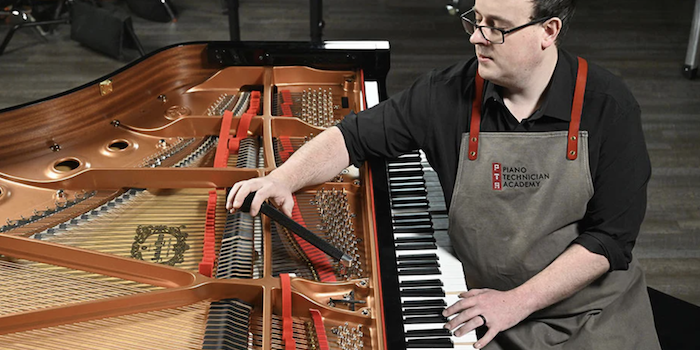
The man whistling tunes pianos.
Most people would first think the man is whistling tunes, but “tunes” is a verb here describing the work of a piano tuner. A better version would be: The man (who is) whistling tunes pianos.
On a side note, garden-path sentences are mostly an issue in English. Other languages, like German or Italian, tend to avoid the ambiguity needed for garden path sentences, because their grammar makes relationships clearer. Verb endings, articles and relative pronouns guide the reader down the right path from the start. English, by contrast, allows words to do double duty as nouns or verbs and often drops helpful markers like “that” or “which”. This flexibility is what makes English a dynamic language, but it also leaves readers more prone to stumble.
Don’t lead your readers down a garden path
According to Wikipedia, garden-path sentences aren’t just a linguistic curiosity. They show up in real-world writing, often unintentionally, and risk confusing readers, especially non-native speakers.
To get an idea of how these odd sentences can appear in an everyday setting, here is an example from a business context:
Companies around the world have come to understand the design of their headquarters reflects their corporate culture.
On first read, your brain assumes that the companies “understand the design of their headquarters”. However, when you get to the word “reflects”, you realize it was actually the subject of a subordinate clause. By adding a word, the meaning becomes clearer:
Companies around the world have come to understand that the design of their headquarters reflects their corporate culture.
Adding one word – that – clears up the ambiguity. Without it, the reader stumbles.
Here is another example:
From Wednesday to Friday, you can start the morning meeting new contacts.
Is it a “morning meeting” or are you “meeting new contacts”? That sentence will require a re-read. Let’s clean it up. Again, just by adding a single word:
From Wednesday to Friday, you can start the morning by meeting new contacts.
See if these sentences immediately make sense to you:
- The board members included abandoned the plan.
- The reports filed quickly pile up in the system.
- The supplier contacted last month confirmed prices dropped sharply.
Read more garden-path sentences here.
How editing can cause problems
Ironically, as pointed out by The Writing Cooperative, garden-path sentences can actually be created during the editing process. Editors who follow the old Strunk & White mantra to “omit needless words” may cut a word like “that” to streamline a sentence. Usually, it works. Sometimes, it doesn’t.
Compare:
The better people communicate, the more they succeed.
Could “better people” be a noun phrase? The first-time reader may have to read it twice.
The better that people communicate, the more they succeed.
Now there’s no confusion. The cleaner sentence isn’t always the clearer one. In writing, clarity should win.
Why copywriters and editors should care
Readers shouldn’t have to pore over your sentence twice just to understand it. Garden-path sentences undermine clarity and can make your writing seem unpolished or careless. A common problem is that writers usually don’t notice them in their own work because they already know how the sentence should be read.
Editors are the best solution. But how do they catch garden-path sentences? Good editors automatically throw up a red flag whenever they stumble or misread a sentence. Then they fix the sentence immediately. They know that if they skip it and read the text again later, they may no longer notice the garden-path sentence because they have already understood the correct interpretation.
Try it for yourself! Go back and re-read some of the examples above. Are they much easier to understand now?
Final thought
Garden-path sentences reveal how much we rely on assumptions when we read, and why clarity is more important than cleverness.
As professional copywriters and editors, our job is to position our clients as thought leaders or to get readers to take an action, like clicking a link or buying a product. Readers should not stumble their way through the customer journey. If something slows your reader down, it slows your message down too.
Need help with copywriting or editing? Contact us!
Feature image courtesy of Benjamin Elliott on Unsplash.
